
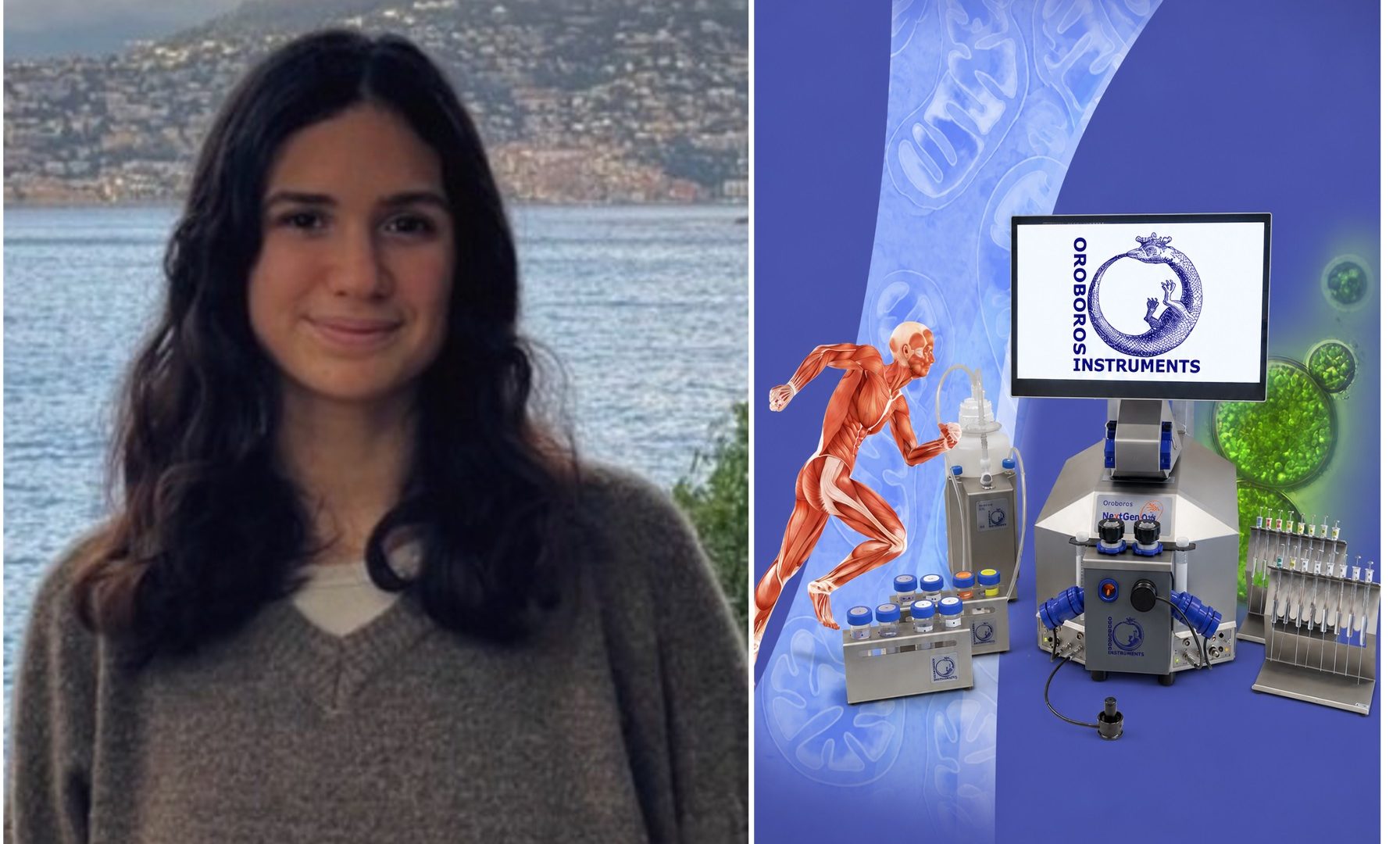
Sophia is a 2nd year PhD student in the lab of Frank Delaunay, studying the role of Klf10, a circadian transcription factor, in the skeletal muscle. In her recent PhD club presentation, she introduced to us, High-Resolution Respirometry (HRR) using the Oroboros O2k, one of the most powerful techniques currently available for investigating mitochondrial respiration.
Mitochondria, besides being the ‘powerhouse of the cell’, also plays essential roles in calcium homeostasis, redox signalling, etc. Consequently, mitochondrial dysfunction is implicated in a wide range of conditions, including ageing, metabolic disorders and cancer. Studies detailing mechanistic insights into mitochondrial function – activity of respiratory complexes, coupling efficiency and maximal respiratory capacity – is thus important, and rely on measuring oxygen consumption. Oroboros O2k is a powerful instrument to measure these parameters, with the ability to precisely control of experimental conditions and also perform Substrate–Uncoupler–Inhibitor Titration (SUIT) protocols.
Sophia’s presentation compared the strengths and limitations of the main techniques used to study mitochondrial function, highlighting why HRR is particularly well suited for mechanistic studies in cultured cells, isolated mitochondria and permeabilized tissues. As the institute will soon acquire an Oroboros, this presentation aimed to provide an accessible introduction to both the principles of mitochondrial respiration and the opportunities offered by this technology for a wide range of research fields.
To know more about this, discover her presentation in the IBV common server.
(By Sophia Marchandise and Sreeparvathy Edachola)